Reflections on Resistance and Love in Times of Violence and Terror
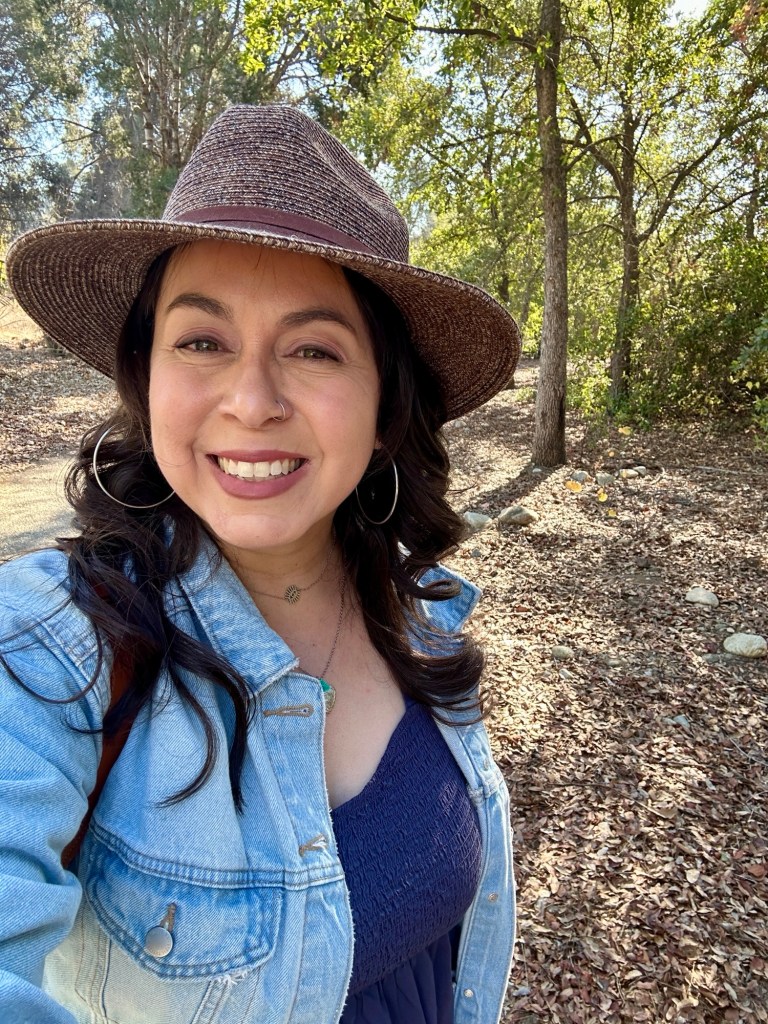
By Irene Sanchez, Ph.D. Xicana Ph.D.
I’ve been reflecting and sitting with myself for a year since I last wrote here in the summer of 2024. After surviving terror in my own life for many years from the most horrific physical assault of my life in early 2020 to the violent words of men claiming they “made me” or I was “lacking”, words my older son, now 13 still recalls. I have experienced a range of violence from domestic violence to sexism perpetuated by men who I recently learned that Gen Z are calling “Performative Males“. Side note: In my day we called them “Mactivists” or “fake feminists”. I often met these men in activist/movement spaces and the violence they perpetuated was familiar due to violence I had experienced throughout my life. There had to come a point where I stopped being hard on myself for meeting multiple performative males and also realizing that violence for me was my normal most of my life. It is not anymore.
On this day I decided to write again. Perhaps it is because it is the anniversary of the Chicano Moratorium when Chicanos marched in East Los Angeles in 1970 to protest the Vietnam War, there were many people who protested including my father and his friends as young teens. My father was the first person that taught me Chicano History and also told me Ruben Salazar was murdered by the LA Sheriffs that day. This day to me is sacred and holy to remember as I can still recall my dad tearing up speaking to me about the police brutality he and our other family members experienced as well as the violence I have since learned about from why they don’t speak Spanish much on that side of the family from violent assimilation policies and colonization to the violence experienced by my great grandparents and grandparents crossing the border to settle in El Paso during the Mexican Revolution to the violence experienced moving to the projects in Boyle Heights and later East Los Angeles. There is violence I have learned of from the aunt who told me she was a pachuca when I was 16 to the uncle who was a pachuco and incarcerated throughout a good portion of his life. My father has an image of the Last Supper hanging in their home that this particular uncle created while in prison. We have survived the violence from Zoot Suit “Riots” and the repression by those in power of movements like the Chicano Movement and more broadly movement for civil rights, to the violence in homes, to surviving wars while “serving” a country that didn’t make any of us feel welcome to begin with. The violence our family and other families has endured and continues to face isn’t only personal or some sort of personal shortcoming, I understand that it is also systemic that has impacted how we relate to one another. Imagine what that type of violence does to not only destroy families, but cultures, and communities as well. We don’t have to imagine, in our bones and bodies we remember.
We see it everyday with videos of ICE raids tearing families apart and bodies of children, mothers, fathers, people that are being destroyed by bombs that our U.S. taxpayer dollars funds while government officials continue to act as if white “American” culture aka white supremacy is the only culture worth preserving and we know the violence they refuse to see that which is the beauty of any of our cultures and traditions that they seek to destroy. It is violence in many forms that most of us have known for generations.
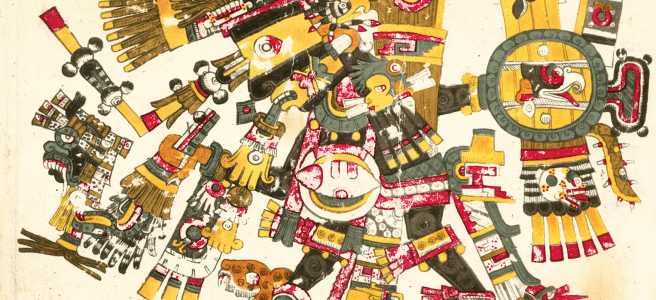
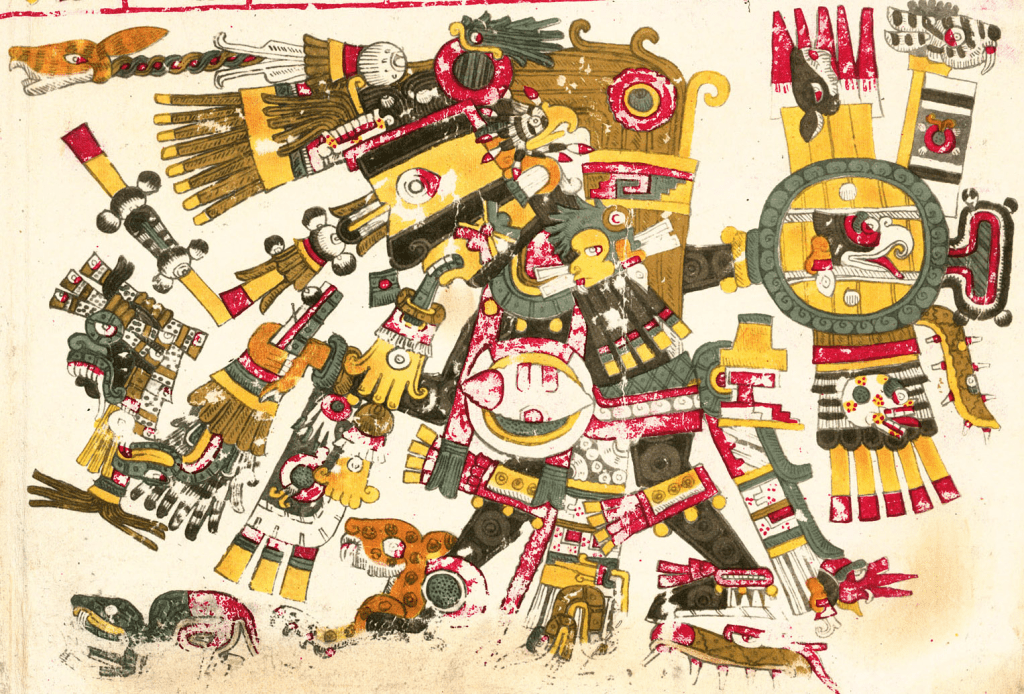
As we often claim in Xicana/o/x or Chicana/o/x activist spaces, we say that reflection is necessary that we must be like the smoking mirror, Tezcatlipoca. We must reflect, but what many often miss when “creating” new theories and ideas and claiming them as their own is that reflection should lead to transformation.
We also invoke reflection when discussing Paulo Freire and me as an educator I have taken this to heart and it is helping me heal. Take a look at this quote from Pedagogy of the Oppressed,
The oppressed suffer from the duality which has established itself in their innermost being. They discover that without freedom they cannot exist authentically. Yet, although they desire authentic existence, they fear it. They are at one and the same time themselves and the oppressor whose consciousness they have internalized. The conflict lies in the choice between wholly themselves or being divided; between ejecting the oppressor within or not ejecting him; between human solidarity or alienation; between following prescriptions or having choices; between being spectators or actors, between acting or having the illusion of acting through the action of the oppressors; between speaking out or being silent, castrated in their power to create and re-create, in their power to transform the world. (1970, p. 33)
To truly realize freedom and realize our dreams of liberation, we must be authentic, but authenticity is often feared as we have also internalized the oppressor that makes us fearful of existing authentically.
I am learning I cannot be concerned with whether those who cause harm out in the world, especially men in activist/movement spaces who are often violent are rewarded and/or are put on pedestals by supporters who also participate in harm reflect, apologize and hold themselves accountable, that day may come, but I still must exist authentically whether they recognize the ways they harm others or not. An educator I respect told me a couple years ago, “Irene what do you want us to do, most of us can’t even hold our own dads/family members accountable.” I responded “Damn you are right”, and so to this day that person also continues to engage with known abusers (perhaps with caution) including those who harmed me and my older son, but I also know I don’t have to hold back from being my authentic self and proceeding to live my own life with the knowledge of this fact.
When I scroll on social media I see a lot of justified rage that I also share. We want to stop oppression and violence from ICE, the Trump regime, and we need to stop the genocide in Gaza and more. While simultaneously we continue to fight the systems of oppression as we remember today on this anniversary of the moratorium has been done for generations, I know that I can’t live with a wide divide between what I say and what I do, but if other people can or can’t that is for them to reconcile especially if they claim to fight for a better world. We all still need to resist and reflect in order to transform like Tezcatlipoca.
What those who perpetuate violence will never realize is that we learn to build with honesty with ourselves and others and not by tearing others down, but with love in what we do on a day-to-day. We realize there is enough sunlight for us all, that one person doing something we wish to do doesn’t take away from us attempting to do it. There is no need to dim another person’s light. In no way am I saying we must be fully healed, realized, have it all figured out to be in community.
bell hooks wrote, ““To build community requires vigilant awareness of the work we must continually do to undermine all the socialization that leads us to behave in ways that perpetuate domination.” Reflection then becomes central to improving oneself and growing to be a better person overall and resisting what we have learned, that violence in any form is normal.
We are flawed, we are human, but when we sit to reflect and be with ourselves in an honest and open way, we can learn what we need to do to sustain ourselves, to heal ourselves, to protect ourselves and one another, in order to keep doing this work that our communities need us to do including resisting, teaching, protesting, chanting, writing, creating, and most importantly transforming in order to do what is needed to take back tomorrow from those in oppressive forces in power and those on a personal level who wish to erase us in the past and today.
I know many of you still read this and this is also why I knew I would return to this space. I know many of you assign your students to read my blog in your classes as I see the views/external links on my dashboard. For me this means that the stories and reflections I share is important and heard by you. I spend a lot of my time ensuring my students feel heard, valued, and cared for. At home my priority is to be present fully for my husband and our two sons. Thank you for bearing witness to these lessons today as we remember the violence our community has resisted and the violence we will continue to resist in order to build a better world. I end this reflection with a quote from the late Subcomandante Marcos from the EZLN as he wrote in his book Our Word is Our Weapon:
At first she is surprised at her own words. But over time, through the strength of repeating them, and above all living them, she stops being afraid of these words, stops being afraid of herself. She is now a Zapatista; she has joined her destiny with the new delirium of the Zapatista National Liberation Army, which so terrorizes political parties and Power’s intellectuals. She has already fought against everyone—against her husband, her lover, her boyfriend, her children, her friend, her brother, her father, her grandfather. “You are insane,” they say. She leaves a great deal behind. What she renounces, if one is talking about size, is much greater than what the empty-handed rebels leave behind. Her everything, her world, demands she forget “those crazy Zapatistas,” while conformity calls her to sit down in the comfortable indifference that lives and worries only about itself. She leaves everything behind. She says nothing. Early one dawn she sharpens the tender point of hope and begins to emulate many times in one day, at least 364 times a year, the January 1 of her sister Zapatistas.
She smiles. Once she merely admired the Zapatistas, but no longer. Her admiration ended the moment she understood that they are a mirror of her rebellion, of her hope.
She discovers that she is born on January 1, 1994. From then on she feels that her life—and what was always said to be a dream and a utopia—might actually be a truth.
If you like what you’re reading, please support the work of this Xicana, Mama, Teacher & Writer. Share, like, and/or follow me on social media @xicanaphd on IG
To bring Xicana Ph.D. to your next conference/event/panel go check out http://www.irenesanchezphd.com after September 1st, 2025 (as it is being updated).

 Xicana Ph.D.